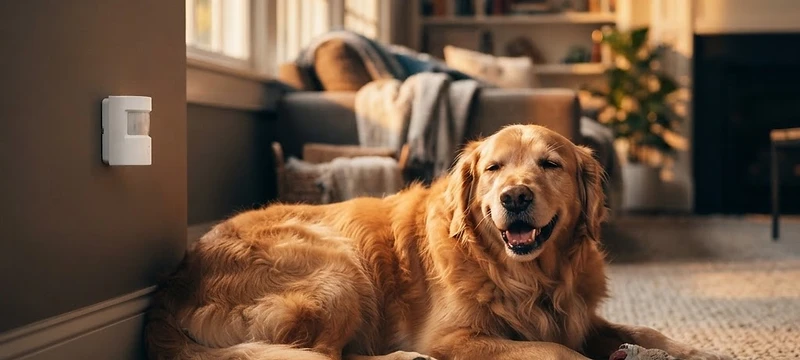
Pet Owners, Beware: How to Stop Your Pet From Triggering False Alarms
Your dog shouldn't be the reason the police show up. Here's how modern security systems tell the difference between a pet and an intruder.
There's a running joke in the security world: the most common intruder is the family cat. False alarms triggered by pets are frustrating, embarrassing, and — if they happen often enough — costly. Here's how modern systems keep your pets moving freely without crying wolf.
Why pets set off alarms
Traditional motion sensors detect any movement and any body heat. A dog bounding through the living room or a cat hopping onto a counter looks a lot like a person to an old-school sensor.
The fix: pet-immune motion sensors
Today's motion detectors use dual technology — motion and body heat — and can be calibrated to ignore animals under a certain weight (typically up to about 80 pounds). They recognize the size and movement pattern of a pet and filter it out.
Placement matters
Even pet-immune sensors have limits. A 90-pound dog jumping directly at a sensor may still trip it. A professional installer knows to place sensors high and angled so pets pass underneath the detection zone rather than through it.
Glass-break sensors are your friend
Glass-break sensors listen for the specific sound frequency of breaking glass — not movement. They're unaffected by pets entirely and add a strong layer of perimeter protection.
Smart cameras with AI filtering
Modern cameras can distinguish a person from an animal. When the system flags motion, the camera's AI confirms whether it's a human before sending you an alert. Your dog gets the run of the house; you only get notified when it matters.
Train your household
Make sure everyone knows the arm/disarm routine, and give pet sitters their own temporary code. Most false alarms come from user error, not the pet.
The takeaway
You shouldn't have to choose between a security system and a happy pet. With the right sensors and professional placement, your home stays protected and your animals stay comfortable. Your $1,200 equipment kit can include pet-immune sensors — just ask your installer.