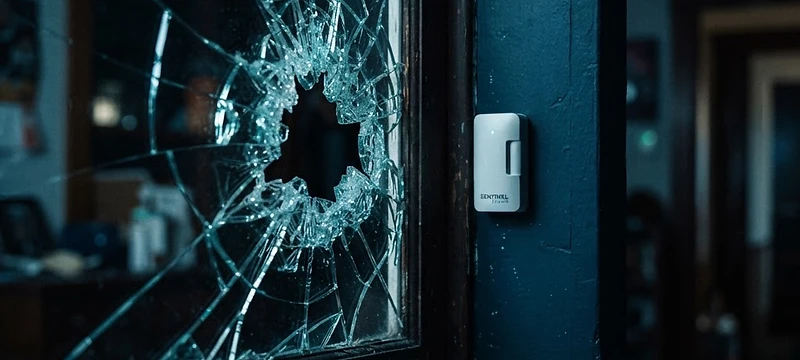
Glass-Break Sensors Explained: Why Your Windows Need More Than a Lock
A locked window won't stop someone who's willing to break it. Glass-break sensors listen for the one sound that means trouble — here's how they work.
A locked window stops a casual intruder. It does nothing against someone willing to smash the glass and reach in. That's the gap glass-break sensors fill — and it's one of the most underrated layers in a complete home security setup.
The threat a lock can't stop
Most break-ins happen through a door or a first-floor window. A locked window slows someone down, but a rock or a crowbar defeats the lock without ever touching it. The window shatters, the latch is irrelevant, and the intruder is inside in seconds.
How a glass-break sensor works
A glass-break sensor is a small audio detector that listens for the specific acoustic signature of breaking glass — the sharp fracture and the cascade of shards. When it hears that pattern, it triggers the alarm instantly.
Motion sensors vs. glass-break sensors
A motion sensor catches an intruder after they're inside. A glass-break sensor catches them at the moment of entry — before they've taken a full step into your home. That's a meaningful head start for your monitoring center.
Where to place them
Glass-break sensors cover a wide area — typically a single sensor can monitor multiple windows in one room. Place them in rooms with large windows, sliding glass doors, and basement windows. A professional installer will map your home's vulnerable glass and position sensors for full coverage.
The cost question
Here's the good news: glass-break sensors are affordable, and your $1,200 equipment kit can include them. They're one of the highest-value additions you can make — a small sensor that protects your most vulnerable entry points.
The takeaway
Locks keep honest people out. Glass-break sensors handle everyone else. If your security plan doesn't include them, your windows are your home's soft spot — and now you know how to close it.